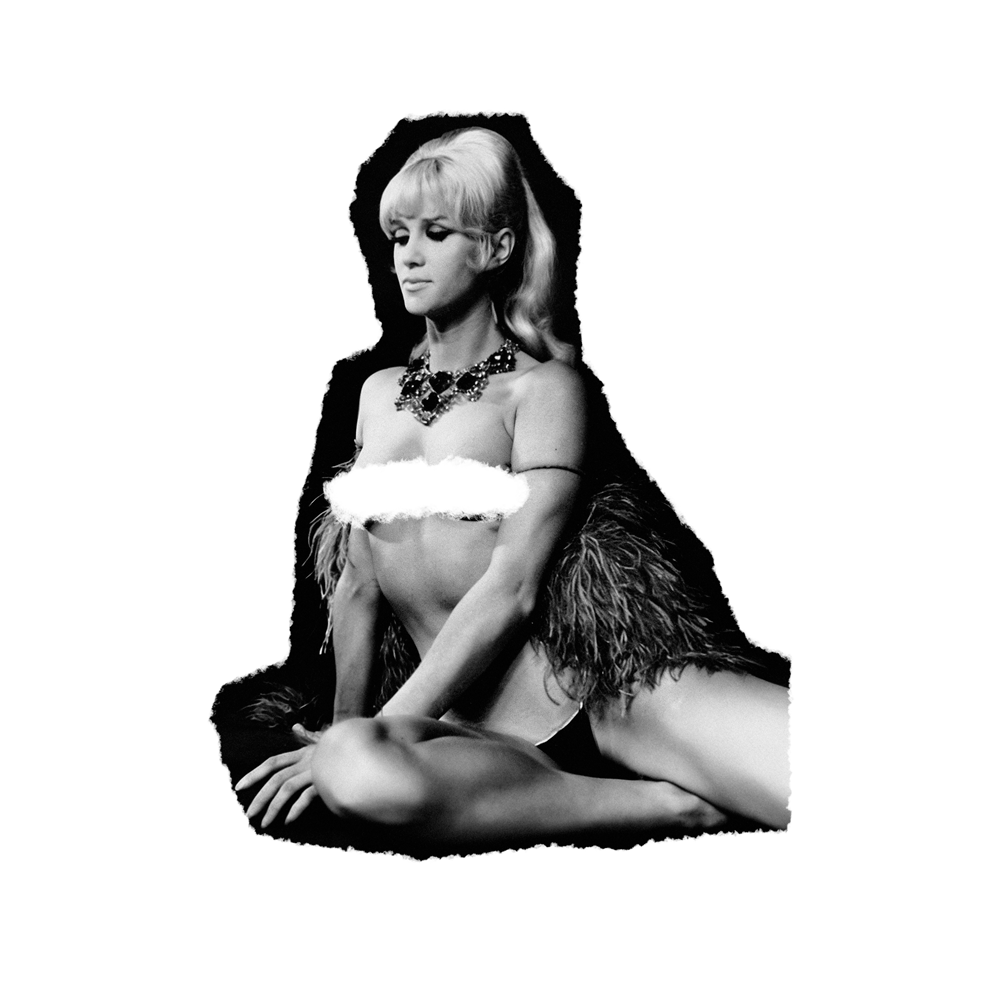
Bettina Uranium was born in France, with Russian roots from her father’s side and English from her mother’s. A Virgo, she was drawn to philosophical texts, as much as she loved dancing. She was initially training to become a stewardess, but in Paris, being beautiful had a way of redirecting women toward the stage. Someone suggested cabaret. She tried it. And it worked.
She joined Crazy Horse Paris in 1964, and in the years that followed, became part of some of its most iconic acts.
A 1970 interview captures her perfectly. A playful diva, detached, self-aware: “I like to live in luxury. The easy, disorganized life is for me. Having my photograph taken, drinking champagne when I feel like it — especially in the bath in the morning. I hate sentimentality and public demonstrations of affection. I’m Bettina — surely, that’s enough.”
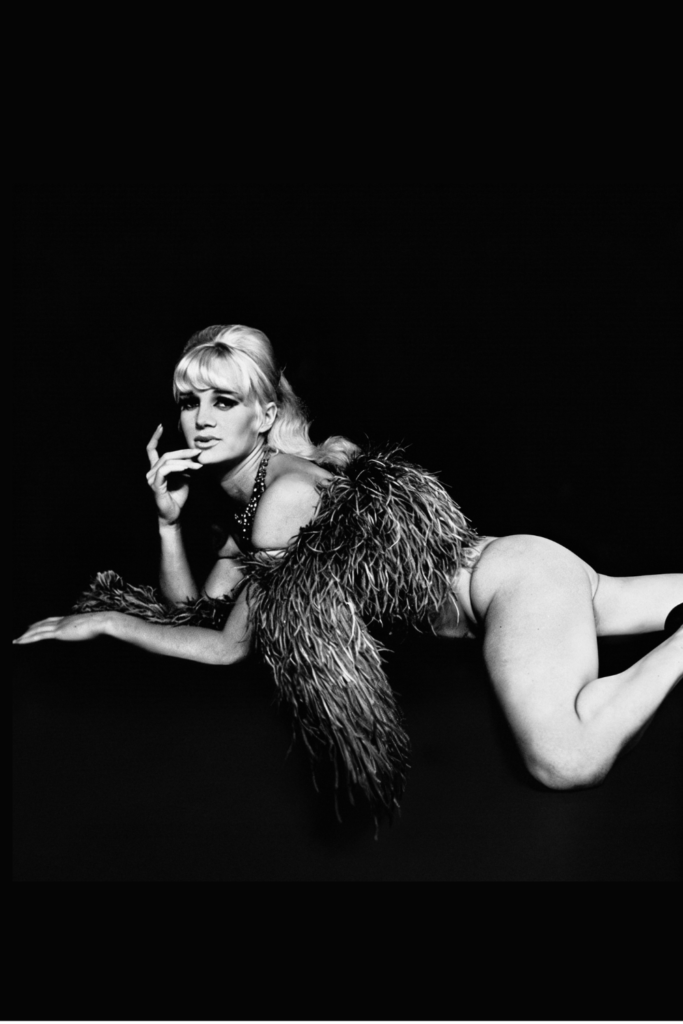
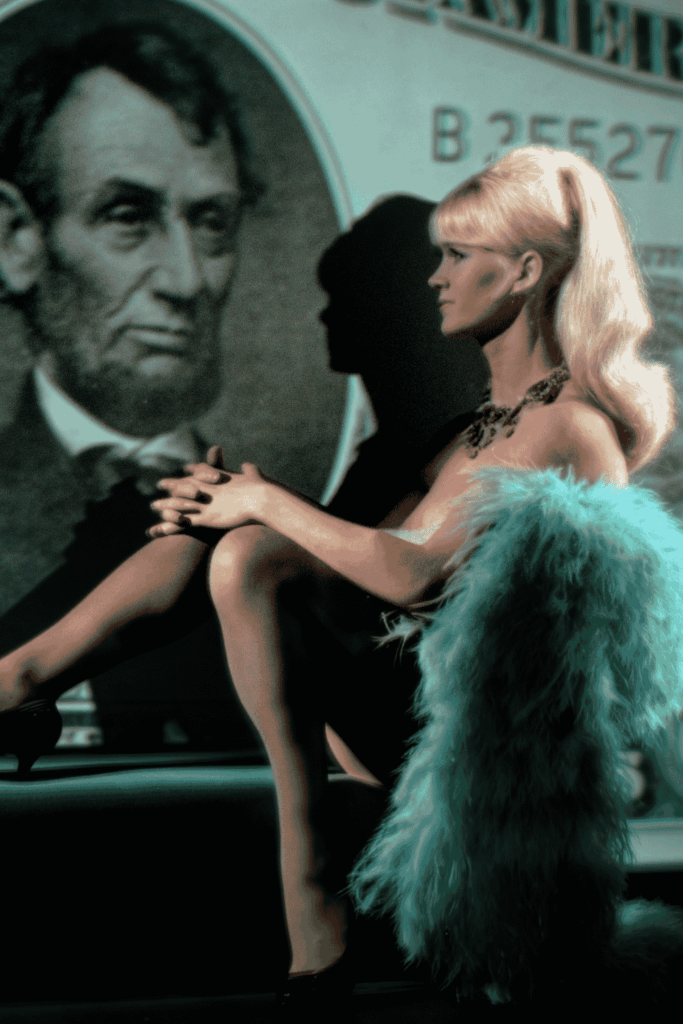
Bettina Uranium's image of Old Hollywood bombshell inspired Bernardin to explore new directions. He built numbers around American iconography: her body becoming a surface for projection, a canvas of symbols.
In one, her body appeared onstage covered only by a projection of the New York City skyline. In another (perhaps her most iconic) she performed over the image of a dollar bill.
Alain Bernardin later explained it himself to Playmen in 1967:“When I projected dollars onto Bettina Uranium’s body, American clients came to thank me. They had discovered for the first time the existence of the motto ‘In God We Trust,’ because at one point in the performance it appeared on her breast. I am always searching for clear images of the present, familiar and therefore ready to be rediscovered. Through these powerful and simple images, one can arrive at discovering the world from another angle.”
In 2013, Noémie Lenoir performed “Dollar” once again, placing this iconic act within the continuity of Crazy Horse Paris repertoire and helping to preserve the artistic legacy of Bettina Uranium.
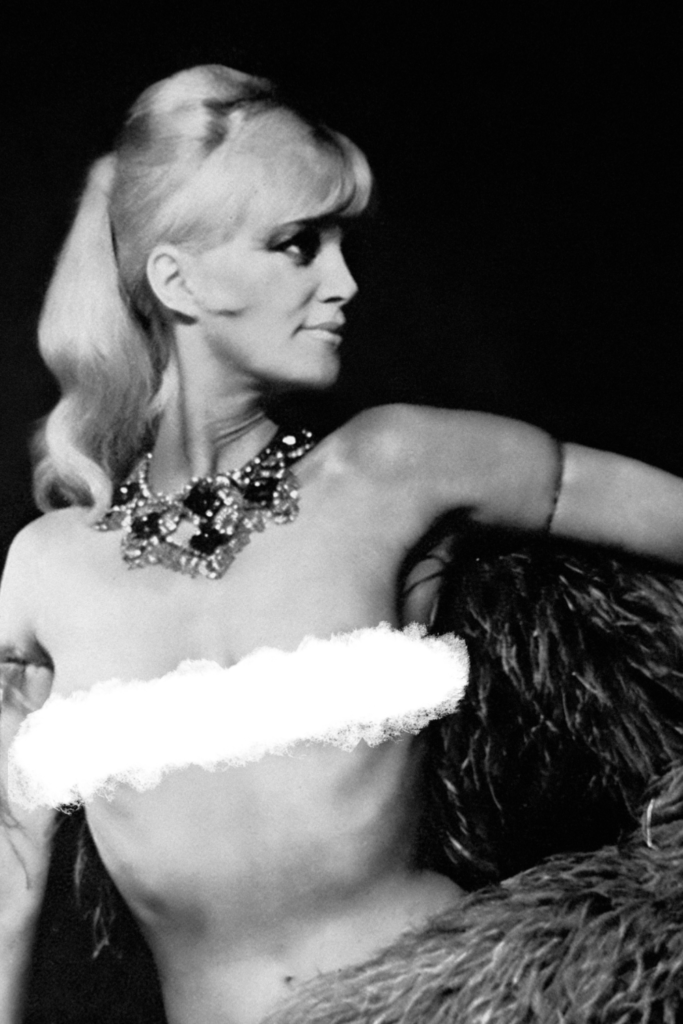
Bettina Uranium in Stop n°66, (1967) - Bettina Uranium in Playmen (june 1967) - Paul de Cordon